
Dog Nail Trimming Made Simple: Healthy Paws Without the Drama.
Nail trimming isn't usually anyone's favorite part of dog grooming. Some dogs don't care. Some act personally offended that you've touched a toe. Others hear the nail clippers come out and suddenly develop impressive athletic abilities nobody knew they possessed.
Unfortunately, regular nail care is still important.
Keeping your dog's nails at a healthy length isn't just about appearance or protecting your floors. Overgrown nails can affect how the feet sit on the ground, interfere with comfortable movement and eventually create painful problems of their own.
The good news is that nail care doesn't have to be complicated. Understanding what you're looking at and taking a gradual approach can make the entire process easier for both you and your dog.
Why Keeping Dog Nails Short Matters
When a dog's nails become excessively long, they can begin changing the way the toes contact the ground. Instead of the foot resting naturally, long nails can push against the toes and alter how the dog distributes weight while standing and walking.
Over time, that can contribute to unnecessary stress through the feet, legs and joints as well as back pain.
Severely overgrown nails can create an even more immediate problem. Nails may curve around toward the paw pads and, if ignored long enough, can actually grow into the pad or surrounding skin.
Dewclaws deserve special attention because they sit higher on the leg and don't normally touch the ground. While other nails may receive some natural wear from walking, dewclaws can quietly continue growing until they curl completely around.
Senior dogs and dogs with mobility or orthopedic issues especially benefit from keeping their feet as comfortable as possible.
Where Should You Actually Clip the Nail?
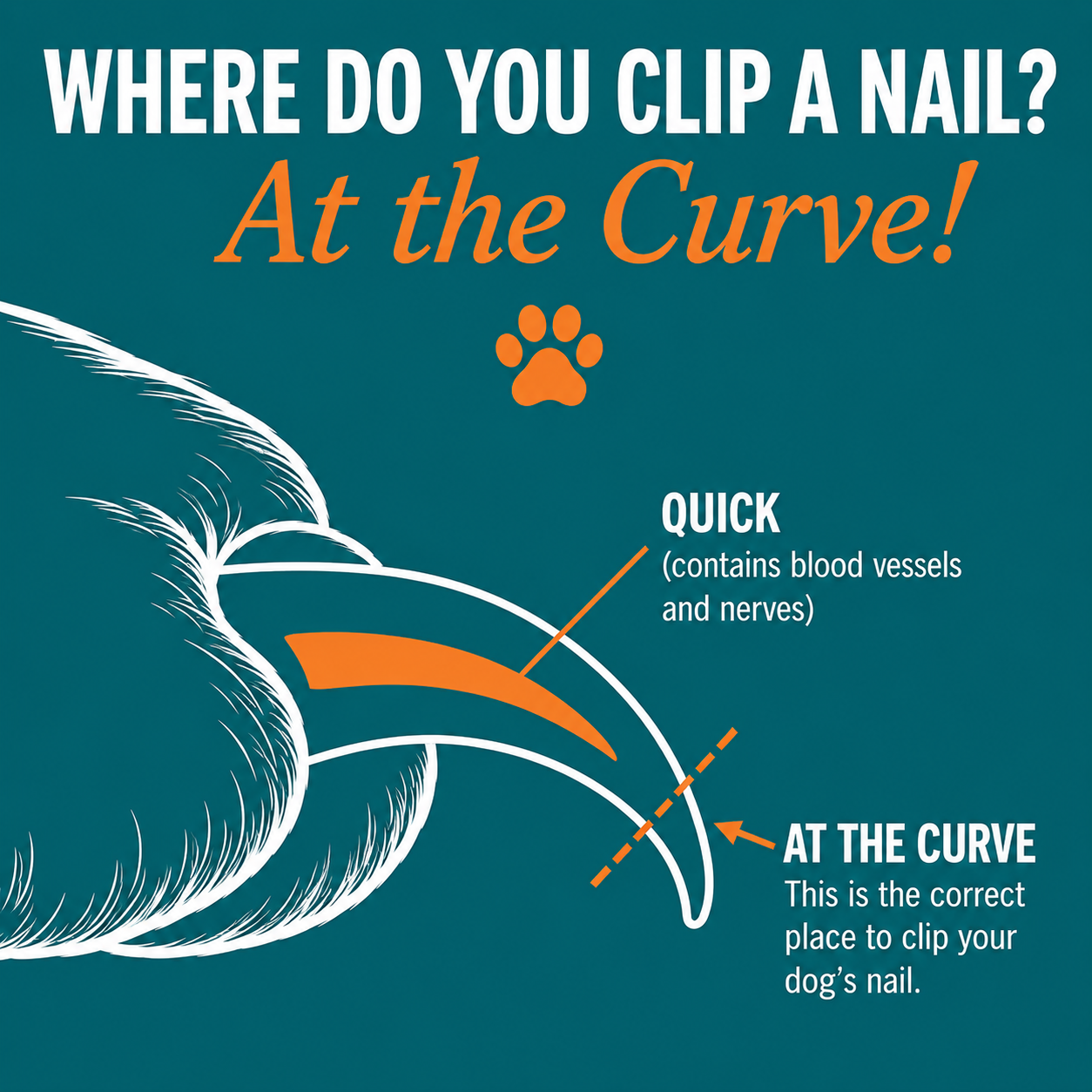
One of the easiest landmarks for pet owners to remember is the natural curve of the nail.
Look at your dog's nail from the side. You'll usually see it extend from the toe before beginning to hook or curve downward. That excess curved portion is generally what you're trying to remove.
Light-colored nails make things easier because you can often see the pink quick through the nail.
Black nails have probably scared more pet owners than just about anything else in grooming because you can't see the quick from the outside. The good news is they don't actually change where you're trying to cut. You're still looking for the natural curve of the nail. The only difference is that you have one less clue to work with. If that first nail lets you know your dog's quicks are running a little long because you have to reach for quick stop, you've learned something about your pup's nails. Simply adjust a little on the remaining nails and you'll know a little more the next time too.
There's no reason to get overly ambitious. Nail trimming isn't a competition to see who can get closest to the quick.
What Happens If You Accidentally Quick a Nail?
Most pet owners and inexperienced nail trimmers worry far more about accidentally quicking a nail than they need to. Yes, your dog may let you know they weren't thrilled about it, and yes, you'll usually see some blood, but it's generally a brief moment rather than the major injury many people imagine. Most dogs recover long before you've even finished that foot.
The important thing is not to panic.
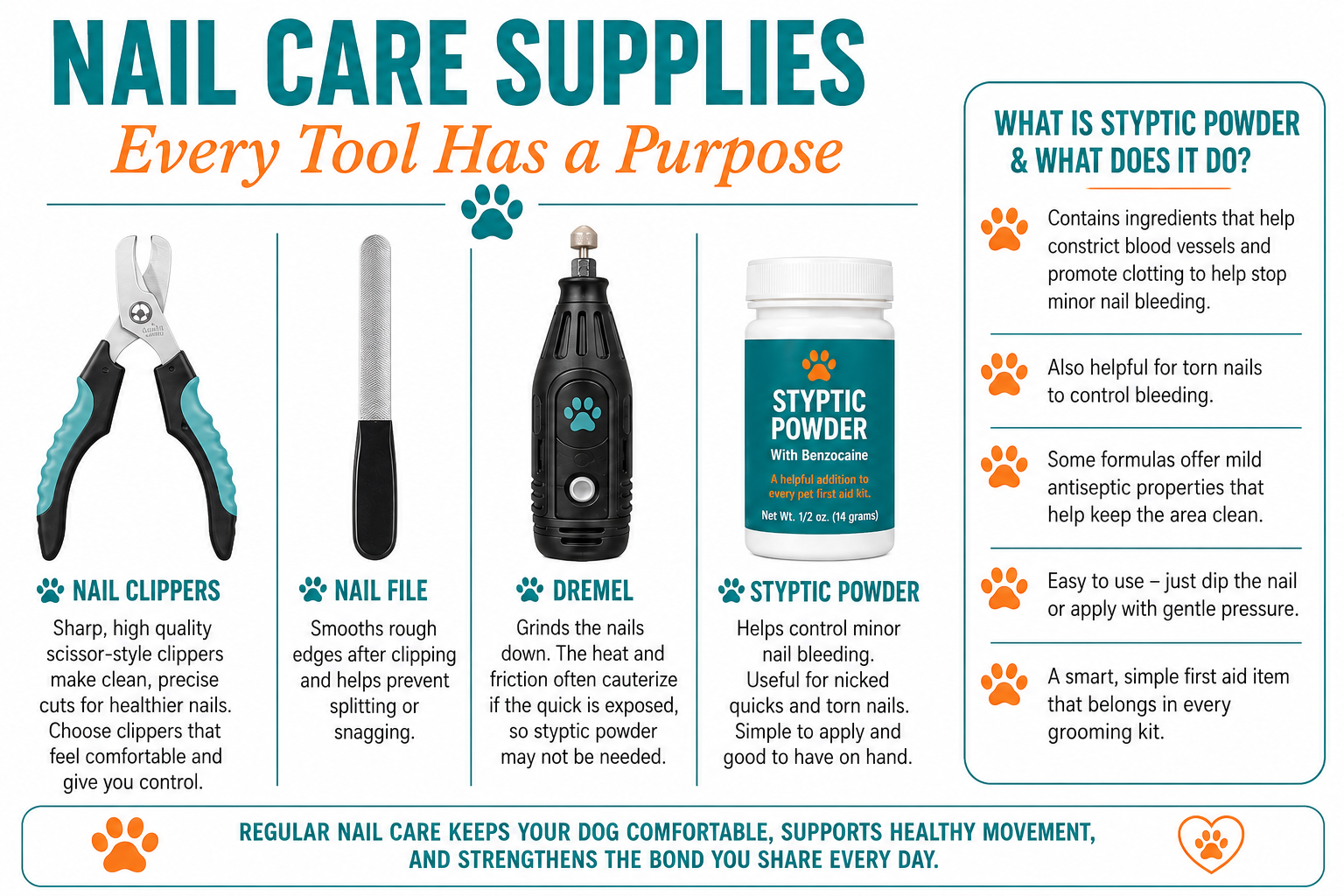
Having styptic powder such as Quick Stop nearby before you begin makes situations like this much easier to handle. Apply it directly to the bleeding nail and hold steady pressure. Resist the urge to keep checking it every few seconds. Give it a little time to do its job.
If you don't have styptic powder available, cornstarch or flour can be used as a temporary substitute along with firm pressure until the bleeding stops.
A torn or broken nail is a different situation altogether. If the nail has split, is hanging by a thread, won't stop bleeding with sustained pressure or your dog is showing significant pain, it's time to contact your veterinarian. Don't pull on a partially attached nail yourself, as it may still be connected.
Long Nails Can Mean Long Quicks
If your dog's nails haven't been trimmed for a while, or they're simply difficult for nail trims, you may discover they can't safely be shortened as much as you'd like in one appointment.
As nails remain long, the quick gradually grows right along with them. That means there may simply not be enough nail available to safely remove everything you'd like all at once.
Instead, regular nail trims approximately every two weeks can gradually encourage the quick to recede over time, allowing the nails to become shorter with each visit.
Think gradual progress rather than trying to make up for months of nail growth in one afternoon.
Make Nail Trimming Normal Before Your Dog Decides It's Terrifying
Puppyhood is the perfect time to teach your dog that having their feet handled is completely ordinary. But there is no time like the present for older dogs as well.
While your sitting on the couch cuddling and watching t.v. touch the paws. Hold individual toes. Gently press on the nails. Then let go without doing anything else.
Not every paw-handling session needs to turn into a nail trim.
Once your pup is comfortable with that, introduce the clippers gradually. Touch them against a nail without clipping. Eventually trim one nail and stop.
One calm, successful nail is better training than forcing your way through all four feet while your puppy struggles.
If you plan to use a Dremel or electric grinder or your groomer or other nail trim expert has expressed difficulty, an electric toothbrush can be a handy training tool. Its vibration gives puppies a gentler introduction to the strange sensation.
Start with the toothbrush running nearby, then gradually touch the vibrating handle to the body, legs and eventually the feet. Once vibration becomes boring, you can begin introducing the actual grinder in the same gradual way.
One thing many people don't realize is that a Dremel or electric nail grinder can quick a nail just as easily as nail clippers. It just isn't always as obvious because the heat created by the grinder often cauterizes the tiny blood vessels before you ever see much bleeding unless you've gone considerably farther back. That's one of the reasons some people believe they've never quicked a nail with a grinder when, in reality, they most likely have.
When using a grinder, use a light touch and keep it moving. Briefly touch the nail bottom to top, pull away, then touch it again. Dremels cause heat and friction which can make things uncomfortable to say the least. It’s also important to ensure the spinning Dremel head does not catch long hair.
A Regular Nail File Can Be Surprisingly Useful
Freshly trimmed nails don't always stay perfectly smooth. A little roughness here and there is completely normal once your dog starts walking, running and playing again.
Fortunately, that's an easy problem to fix.
A regular human nail file or emery board works surprisingly well for smoothing rough edges between nail trims. You're not trying to shorten the nail. You're simply taking the sharpness off those little points that can sometimes develop after a trim or as the nails grow back out.
It's also a great excuse to spend a few seconds handling your dog's feet without turning every session into a full nail trim. Hold a paw, touch a nail or two with the file, offer a little praise, then call it a day. Those short, uneventful sessions often do more to build confidence than waiting until every nail needs attention.
Cats are a little different. Their claws naturally shed outer layers, so an emery board often catches and shreds those layers instead of smoothing them. For most cats, simply trimming the sharp hooked tip is usually the better option. Older cats should also have their paws checked regularly because thick, overgrown claws can eventually curl into the paw pads.
Healthy Nails Are Part of Healthy Feet
Check your pet's nails regularly, including those easily forgotten dewclaws. Start handling puppy feet early but it’s never too late, introduce nail tools gradually and keep styptic powder with your nail trimming supplies just in case.
Most importantly, don't turn routine nail care into a wrestling match if you can avoid it. A dog that learns nail trimming is boring is much easier to work with than one who has learned that touching a foot means everyone is about to have a terrible afternoon and they are about to be terrorized and held down so people can mess with their feet.
Whether you're using a mobile groomer, visiting a traditional grooming salon, having your veterinarian handle those toes or maintaining your dog's nails at home, may your future nail trims be smooth sailing, your quicks remain untouched and your Quick Stop stay safely in the container where it belongs.
Want to dive deeper into dog nail trimming? You can read a more comprehensive article here.